
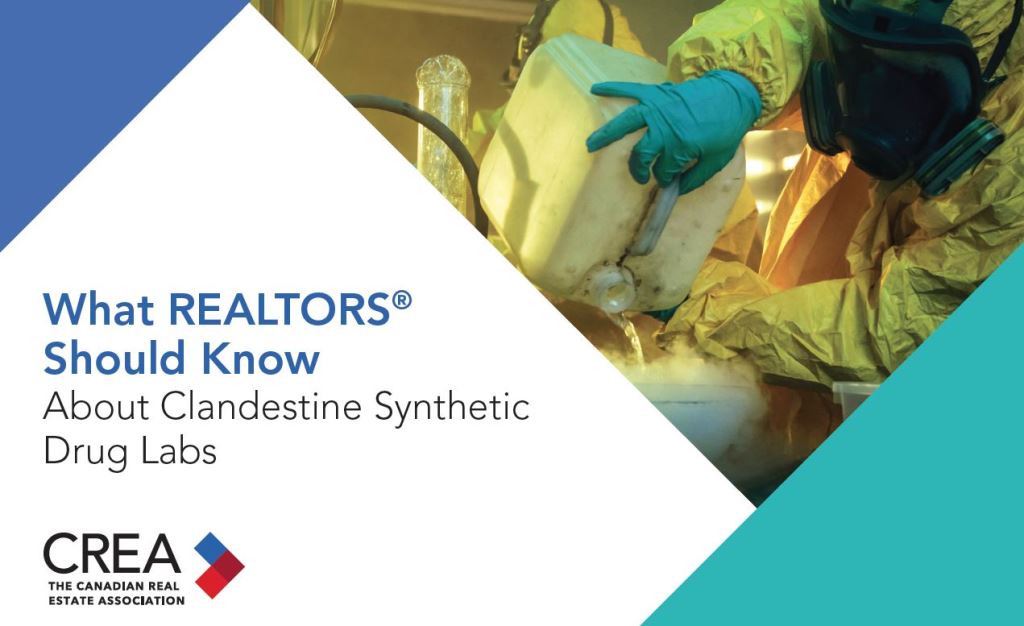
When you think of scientific laboratories making synthetic (human-made) drugs for pharmaceutical use, you probably envision a secure, ventilated and clean workspace with technicians wearing protective glasses, gloves and masks—a lab where ingredients are carefully measured and labeled. In the case of an accredited drug laboratory, you would be right. Unfortunately, illegal, toxic, and highly dangerous clandestine labs also exist throughout communities across Canada. Also referred to by police as “clan labs,” they can be hidden in the heart of any neighbourhood.
What is a clandestine drug lab?
A clan lab refers to a secret or concealed location where synthetic drugs such as methamphetamine (also referred to as “meth”), MDMA (also referred to as “ecstasy”), and fentanyl are produced, or prepared. Pill presses are also used to transform synthetic drug powder into tablets. These labs operate in total illegality under the Controlled Drugs and Substances Act.
They can be very elaborate—or very simple—and can be found in upscale single- andmultiple-family dwellings, farms, rural properties, automotive shops or warehouses. Some types of production require very little equipment and external electrical supply. Ingredients can be mixed in pop bottles that can become volatile and explosive.
Most of Canada’s synthetic drug supply is produced domestically with organized crime behind the bulk of production. Many ingredients are available in drug, food supplement and hardware stores. The motives of the operations are simple: to make money—without consideration of the health and safety of drug users or the neighbourhoods they occupy. The presence of these labs leads to increased criminal activity in these communities. What is a clandestine drug lab?